Overview
Wells lose production as mineral scale, iron bacteria and fine sediment choke the water-bearing fractures. Rehabilitation is often far cheaper than drilling a replacement well — and we tell you honestly when it isn't.
- Camera
- Downhole video
- Methods
- Surge, brush, chemical, airlift
- Baseline
- Before/after yield test
- Typical gain
- Varies — never guaranteed
- Report
- Written findings
In Depth
What to expect, explained properly.
Wells do not usually 'run out of water'
When an older well loses production, the aquifer has rarely disappeared. What has usually happened is that the pathway into the well has closed up. Mineral scale precipitates on the borehole wall, iron bacteria build slime and rust-colored mass across the fractures, and fine sediment accumulates in the bottom of the hole and buries the lowest producing zones.
That is a mechanical and chemical problem, and mechanical and chemical problems have fixes that cost a fraction of a new well.
How we diagnose before we treat
Rehabilitation starts with evidence: your yield history, a measured baseline drawdown test, and a downhole camera run. The camera shows the casing condition, the seal, the water level, encrustation on the open hole and how much fill sits at the bottom. You watch that footage with us.
The cause dictates the method. Sediment fill is bailed and airlifted. Scale and biofouling are broken up mechanically by surging and brushing, and treated chemically where the deposit warrants it. After treatment the well is redeveloped and retested against the same baseline, so improvement is a measured number rather than an impression.
When we tell you not to do it
If the camera shows perforated or collapsing casing, a failed surface seal, or an open hole that was marginal the day it was drilled, rehabilitation is money spent to delay a decision. We say that plainly, show you the footage, and price the alternative honestly.
We also will not promise a yield number in advance. Anyone who does is guessing with your money.
Ground Conditions
North Idaho & Eastern Washington geology.
The failure mode we find in an old well tracks closely with the formation it was drilled in.
Rathdrum Prairie / Spokane Valley
Glacial outwash — sand, gravel, cobbles, boulders
Sand and fine material migrating into the well, screen and liner plugging, and pump wear from abrasives are the usual culprits in coarse outwash.
Coeur d'Alene, Sandpoint, Hayden, Bonners Ferry uplands
Belt Supergroup metasedimentary rock — quartzite, argillite, siltite
Fracture faces encrust with mineral scale and iron bacteria, gradually choking the only pathways the well has. These wells often respond well to surging and targeted chemical treatment.
Priest River, Kaniksu batholith country, higher benches
Granitic bedrock
Decomposed granite can slough into the hole and accumulate as fill, burying producing zones near the bottom.
Spokane, Cheney, Palouse, Columbia Basin
Columbia River Basalt Group with Latah Formation interbeds
Producing interflow contacts can encrust or silt in from adjacent sediment interbeds. Camera work matters here because the productive zones are narrow and specific.
Geology in the Inland Northwest changes over short distances — two neighbors on the same road can have very different wells. Everything below describes conditions that are common in the region, not a prediction for your parcel.
On Your Property
What the job looks like for you.
Baseline first
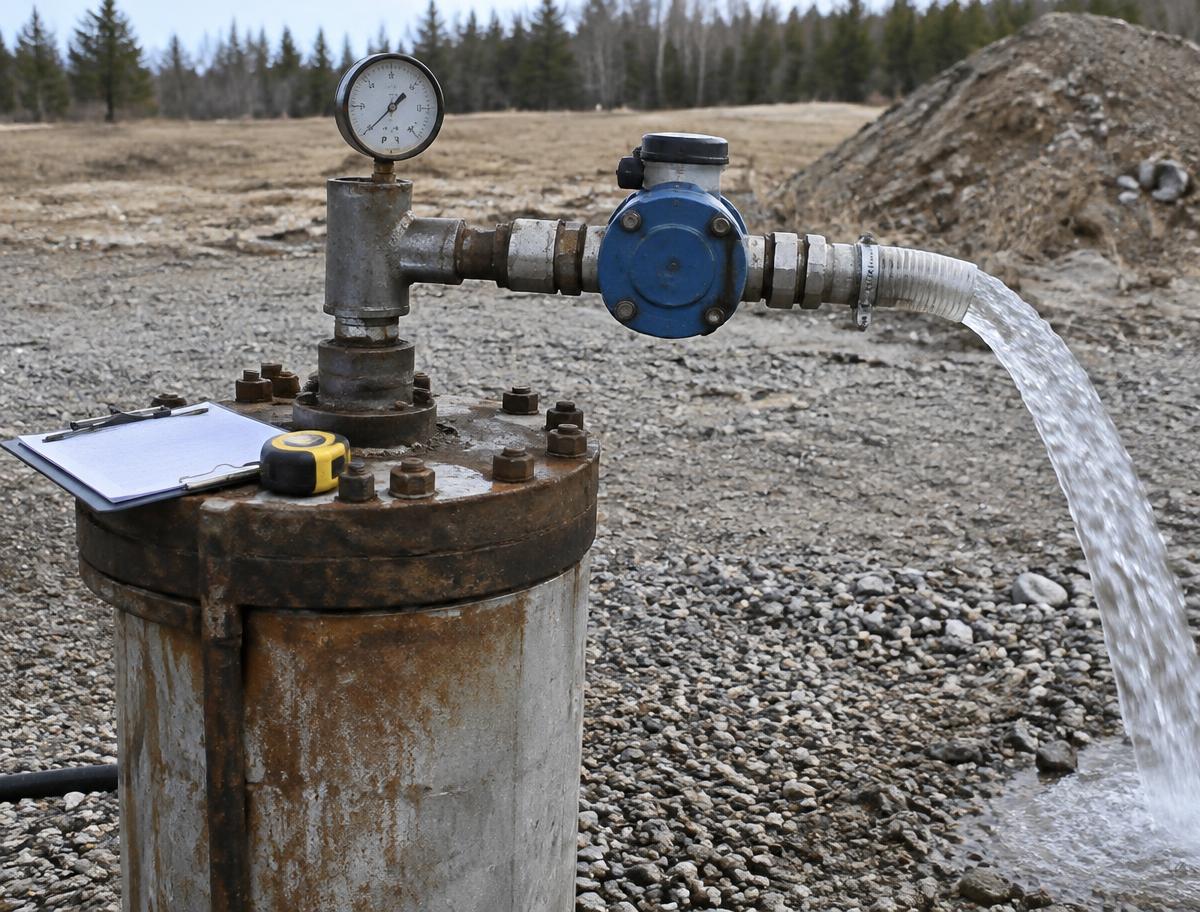
Static level, pumping level and yield are measured before anything is done, so there is a real before-and-after.
Camera inspection
Downhole video of casing, seal, water column and open hole. You get the footage and a written summary of the findings.
On-site work
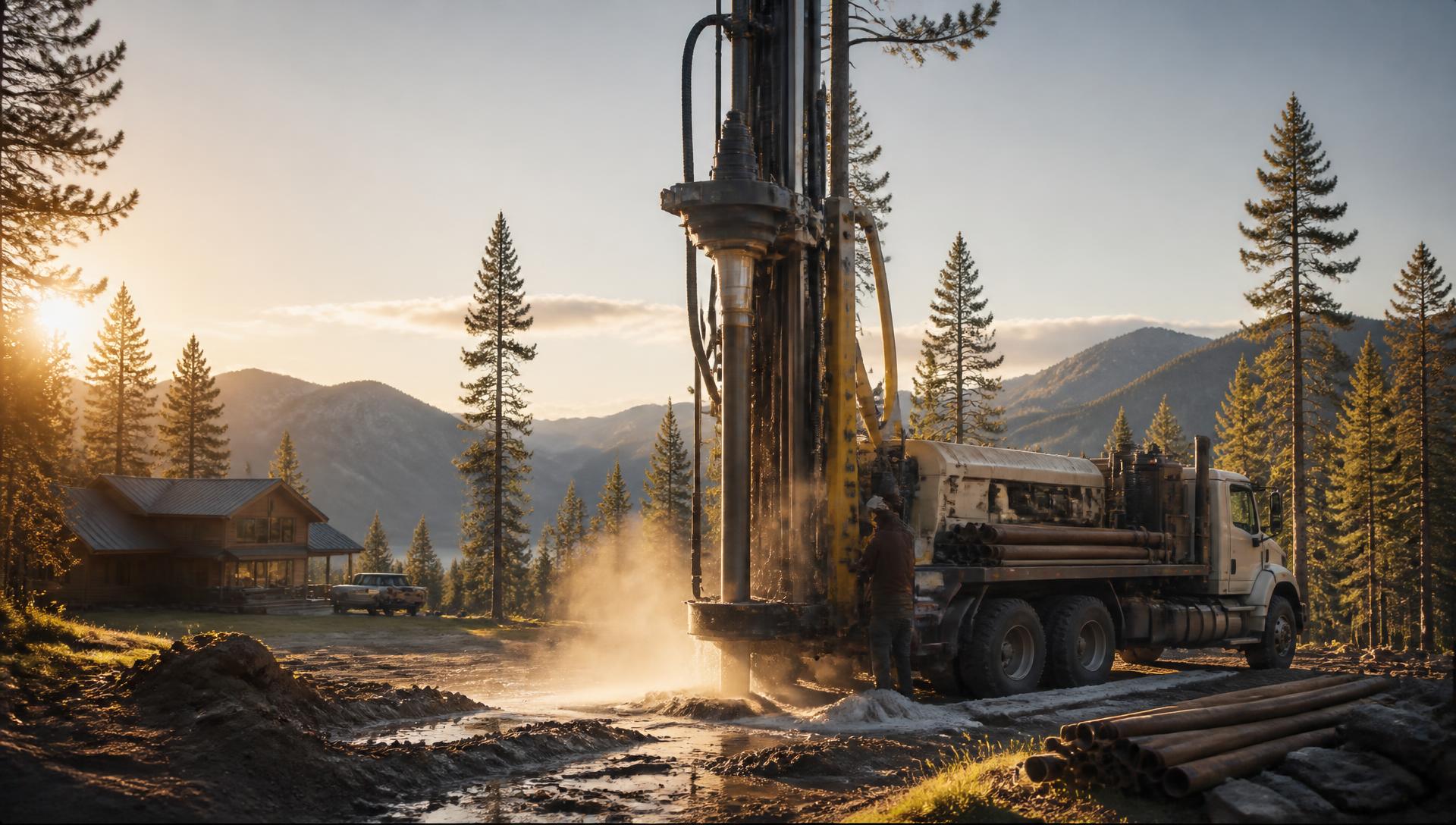
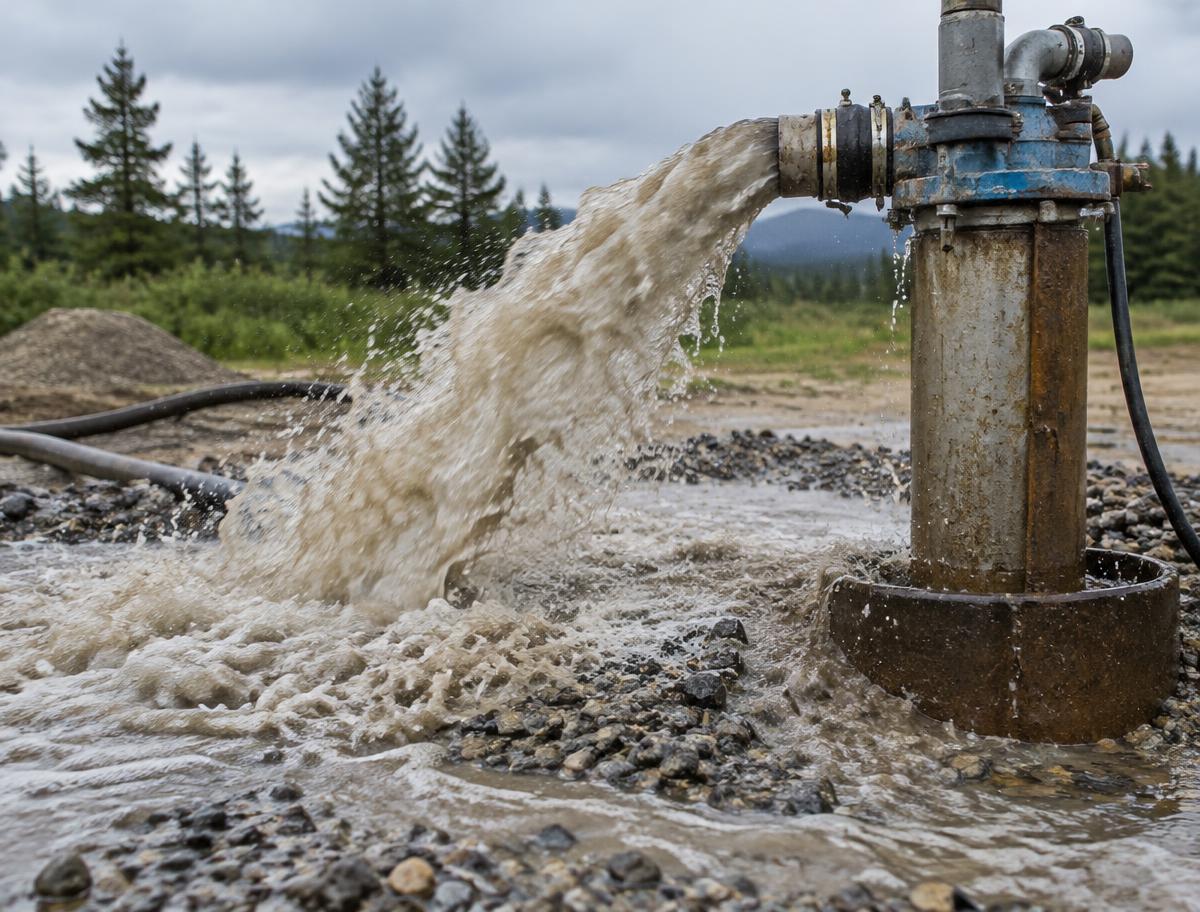
Typically one to two days. Expect discharge water, sediment and discolored water at the surface — that material coming out is the point of the exercise.
After treatment
The well is redeveloped until it runs clear, then retested. Your household water may run discolored briefly afterward and should be run out at an outside tap.
The honest outcome range
Some wells recover most of their original production. Some improve modestly. Some tell us the well is at the end of its service life. We report what we measure either way.
Typical Investment
What well rehabilitation usually runs.
Ranges below reflect typical projects in our service area. They are planning numbers — not a quote. Your estimate is built from your property, your well data and the actual scope of work.
Camera inspection
Downhole video of casing and open hole
Surge & bail development
Mechanical redevelopment
Chemical treatment
Scale and iron bacteria removal
Full rehabilitation program
Inspection, treatment, redevelopment, testing
What's Included
Scope of work.
Diagnosis
Yield history, drawdown and downhole camera identify the actual cause.
Mechanical work
Surging and brushing to break loose scale and restore fracture flow.
Chemical treatment
Targeted at iron bacteria or mineral scale where appropriate.
Airlift & bail
Debris removed from the bottom of the hole.
Post-test
Yield retested against the baseline so improvement is measurable.
Recommendation
If rehab won't get you there, we say so before you spend more.
How It Goes
Start to finish.
- 01
Inspect
Camera and yield baseline.
- 02
Plan
Method selected for the specific failure mode.
- 03
Treat
Typically 1 – 2 days on site.
- 04
Retest
Measured yield compared to baseline.
Straight Answers
Questions we
actually get.
Will rehab restore my original yield?
No one can promise that. Camera work and yield history tell us how likely improvement is before you commit.
Rehab or drill new?
If the casing is compromised or the fractures are exhausted, a new well is the better spend. We'll show you what the camera shows.
How often should a well be redeveloped?
Many wells never need it. High-iron and high-mineral wells often benefit every 7 – 15 years.
Well Worx does not guarantee depth, water quantity, yield, water quality or geologic conditions. Recorded state well data is historical information published by state agencies and is not a prediction of results on your property.
Also from Well Worx