Overview
A pump is sized to the well, not to a catalog. We match horsepower, setting depth and tank volume to your well's tested yield, static level and household demand — then wire, plumb and pressure-test the whole system.
- Typical HP
- 1/2 – 2 HP
- Setting depth
- Well-specific
- Tank sizes
- 20 – 119 gal
- Constant pressure
- Available
- Warranty
- Manufacturer + labor
In Depth
What to expect, explained properly.
The pump is designed from your well's numbers
A submersible pump has to lift water from the pumping level in your well to the pressure tank, then hold household pressure on top of that. Those two loads together are total dynamic head, and they decide horsepower. A pump sized off a rule of thumb instead of your well's measured static level, pumping level and tested yield either burns out early or never delivers the pressure you paid for.
Setting depth matters as much as horsepower. Set the pump too high and it loses suction when the level draws down; set it too low and it pulls sediment off the bottom of the hole and grinds itself out. On fracture-flow bedrock wells, which is most of North Idaho, we set the pump to protect both the well and the motor.
Standard tank versus constant pressure
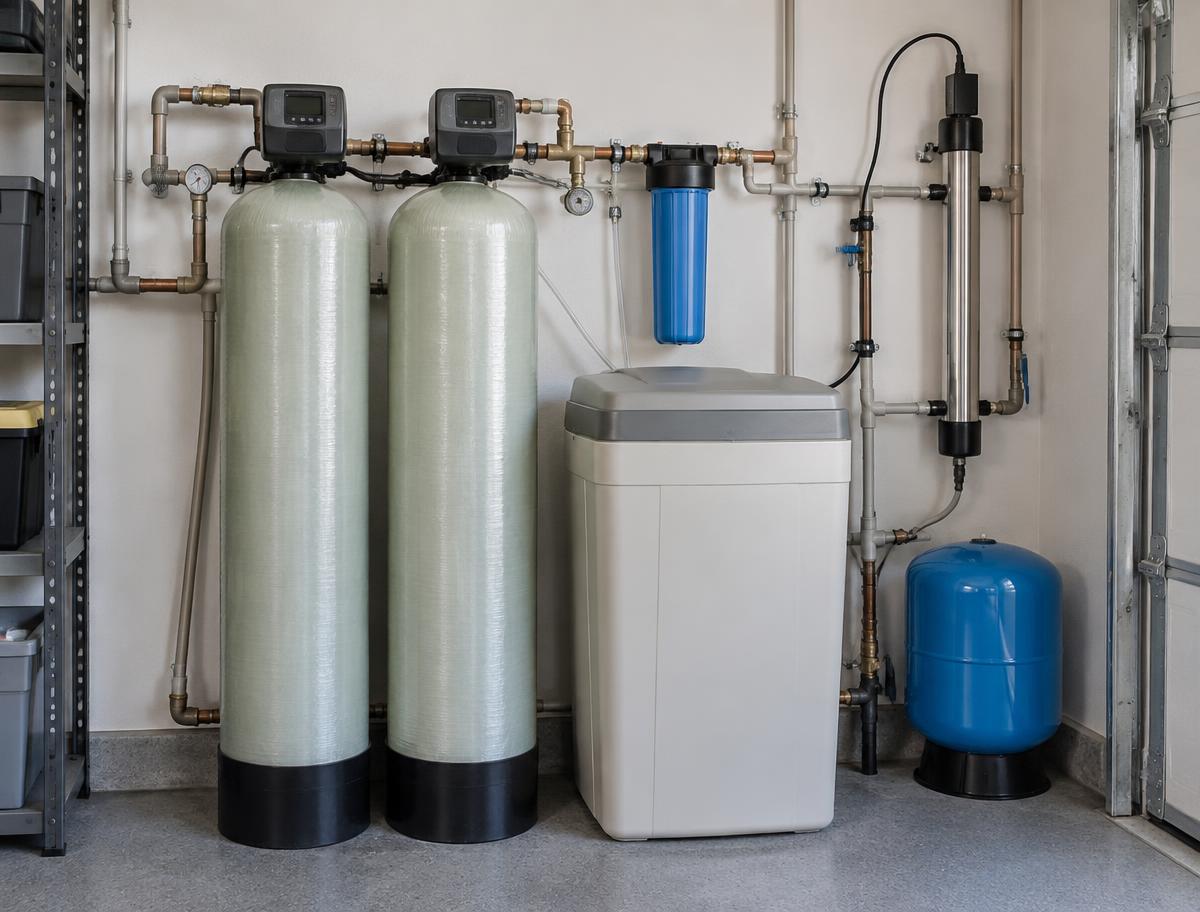
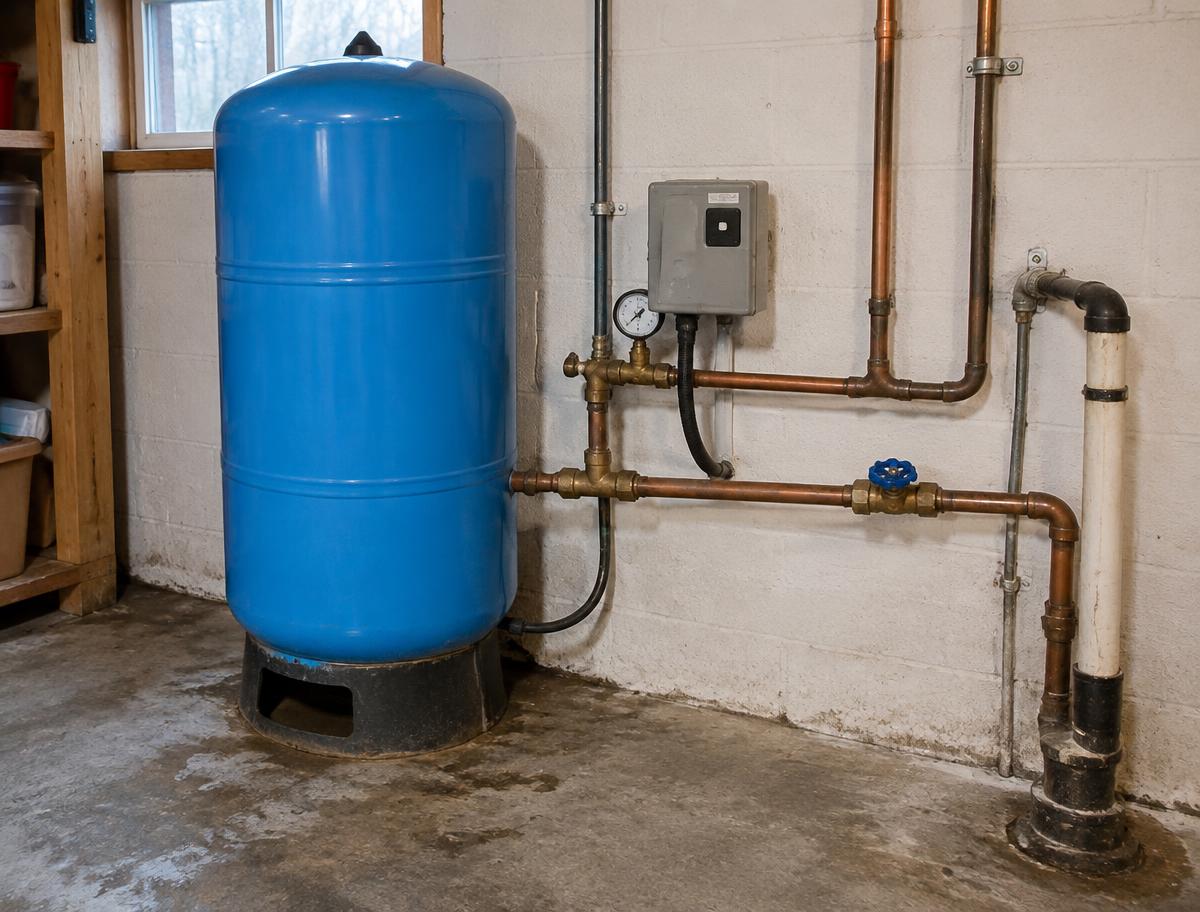
A conventional system runs the pump between a cut-in and cut-out pressure with a bladder tank as the buffer. It is simple, durable, inexpensive to repair, and pressure swings noticeably when a second fixture opens.
A constant-pressure system uses a variable-speed drive to hold one pressure regardless of demand. It is genuinely better for homes with multiple bathrooms, long service runs, irrigation, or a shop and a house on one well. It also costs more up front and puts sensitive electronics on a rural power supply — which is why we specify surge protection with it rather than pretending that is not a factor.
Low-yield wells and storage
In hard rock, a three or four gallon-per-minute well is common and is entirely livable. The fix is not a bigger pump — pumping a well faster than it recharges just runs it dry. The fix is storage: a cistern or storage tank filled slowly by the well, with a booster pump delivering full household flow on demand.
This is one of the biggest differences between contractors here. A driller who only sells pumps will tell you a low-yield well is a problem. A properly designed storage system turns the same well into a house that never runs out of water.
Ground Conditions
North Idaho & Eastern Washington geology.
Pump design changes with the formation your well is finished in, because yield and drawdown behave differently in gravel than in fractured rock.
Rathdrum Prairie / Spokane Valley
Glacial outwash — sand, gravel, cobbles, boulders
High yield and shallow water usually mean modest horsepower and generous flow. The design concerns are sand and sediment control and keeping the pump off the bottom in coarse material.
Coeur d'Alene, Sandpoint, Hayden, Bonners Ferry uplands
Belt Supergroup metasedimentary rock — quartzite, argillite, siltite
Fracture-fed wells recharge at a fixed rate. Sizing must respect that rate, and pumping level is often well below static level. Storage-assisted design is common and works well.
Priest River, Kaniksu batholith country, higher benches
Granitic bedrock
Similar to Belt rock: steady but modest yields, deeper settings, and real benefit from cycle protection and low-yield controls.
Spokane, Cheney, Palouse, Columbia Basin
Columbia River Basalt Group with Latah Formation interbeds
Yields range from excellent at a producing interflow contact to marginal between them. Some basalt wells also draw fine sediment from interbeds, which drives filtration ahead of the pressure tank.
Geology in the Inland Northwest changes over short distances — two neighbors on the same road can have very different wells. Everything below describes conditions that are common in the region, not a prediction for your parcel.
On Your Property
What the job looks like for you.
We start with data, not a catalog
Static level, pumping level, tested yield, well depth, service line length, elevation change and fixture count all get measured or confirmed before parts are ordered.
Install day
Most residential installs are a single day: pump and drop pipe set, pitless adapter installed through the casing, wiring run to a disconnect, tank and controls plumbed, system started and pressure-tested.
Electrical realities
The pump needs a properly sized circuit and disconnect. On new builds we coordinate with your electrician; on retrofits we tell you up front if existing wiring is undersized rather than discovering it after startup.
What we verify before leaving
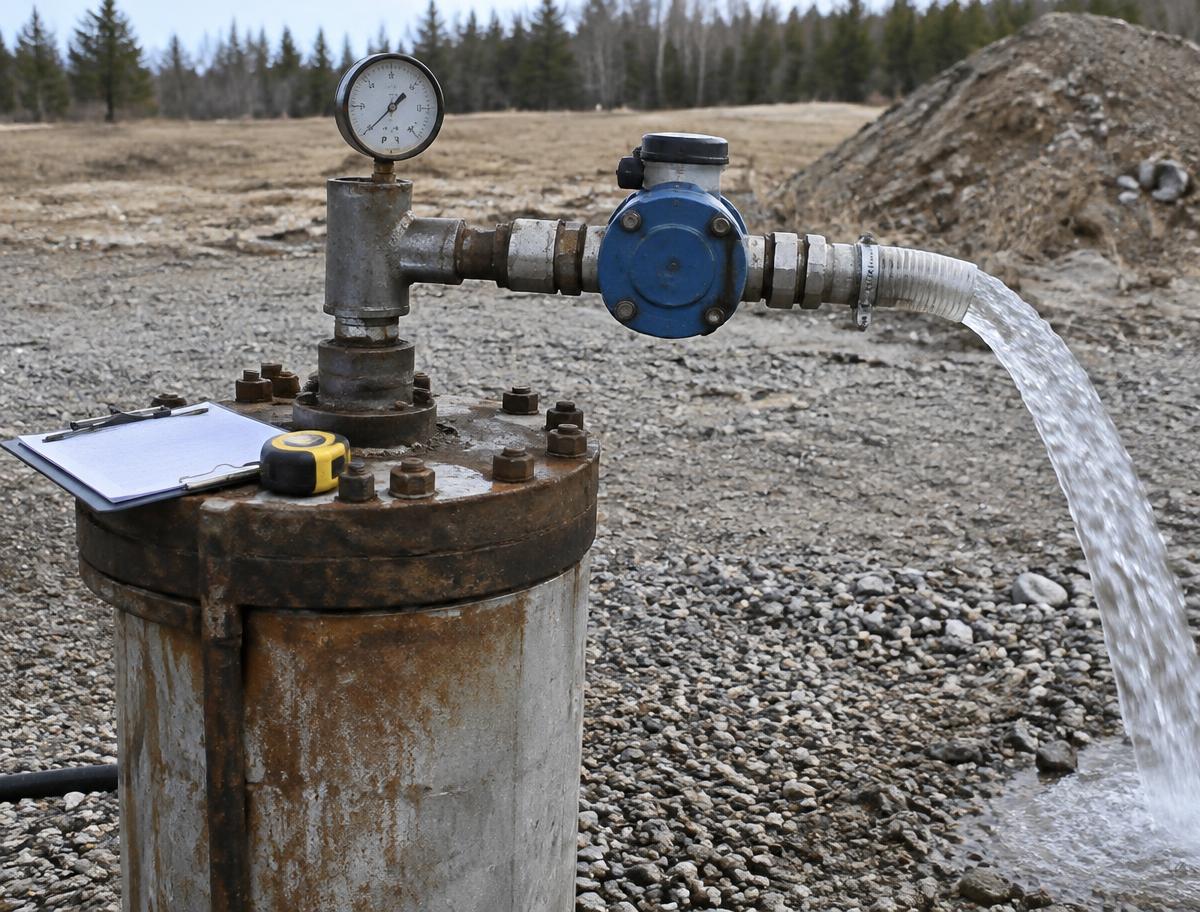
Amp draw against nameplate, drawdown and recovery under load, pressure cycle timing, and tank pre-charge. Those readings go into your record so the next technician — ours or anyone's — starts informed.
Realistic lifespan
Submersible pumps commonly run 8 to 15 years here. Short cycling, sediment and iron chemistry shorten that far more than age does.
Typical Investment
What pump systems usually runs.
Ranges below reflect typical projects in our service area. They are planning numbers — not a quote. Your estimate is built from your property, your well data and the actual scope of work.
Standard submersible system
Pump, tank, wiring, pitless, hookup
Constant-pressure system
Variable-speed controller and pump
Pump replacement
Existing well, like-for-like
Service call & diagnosis
Pressure, amp draw, water level check
What's Included
Scope of work.
System sizing
Flow, depth and fixture-count demand calculated before parts are ordered.
Pump & motor
Submersible pump set at a depth that protects both yield and motor.
Pitless adapter
Below-frost connection from casing to buried service line.
Pressure tank & controls
Tank volume, pressure switch and cycle protection set for the household.
Electrical
Control box, wire sizing and disconnect to code.
Startup test
Drawdown, recovery and pressure cycle verified before we leave.
How It Goes
Start to finish.
- 01
Well data review
Yield, static level and depth from testing or records.
- 02
Sizing & estimate
Line-item parts and labor.
- 03
Install
Most residential installs complete in one day.
- 04
Verification
Pressure, amp draw and drawdown logged to your record.
Straight Answers
Questions we
actually get.
Is constant pressure worth it?
If you run multiple fixtures, irrigation or long service lines, yes — pressure stays steady instead of cycling. On a simple single-bath home the standard tank system is usually the better value.
How long does a pump last?
Commonly 8 – 15 years, driven more by cycling and water chemistry than by age alone.
My water sputters — is it the pump?
Often it's air from a dropping water level or a waterlogged tank. Diagnosis checks pressure, amp draw and water level before anything is replaced.
Well Worx does not guarantee depth, water quantity, yield, water quality or geologic conditions. Recorded state well data is historical information published by state agencies and is not a prediction of results on your property.