Overview
Treatment is specified from your water test — never from a sales sheet. Iron, manganese, hardness, sediment, sulfur odor, arsenic and bacteria each need a different answer, and installing the wrong one is how people end up with three tanks that don't fix the problem.
- Tested for
- Iron, hardness, arsenic, bacteria, pH, nitrate
- Stages
- 1 – 4 typical
- Bypass
- Standard
- Retest
- Included after install
- Records
- Stored in your portal
In Depth
What to expect, explained properly.
Treatment starts with a lab test, not a sales pitch
Every treatment decision should trace back to a number on a lab report. Hardness, iron, manganese, pH, nitrate, arsenic, tannins, sulfide odor and bacteria are separate problems with separate equipment, and treating the wrong one is how homeowners end up with three tanks in the garage and water they still do not like.
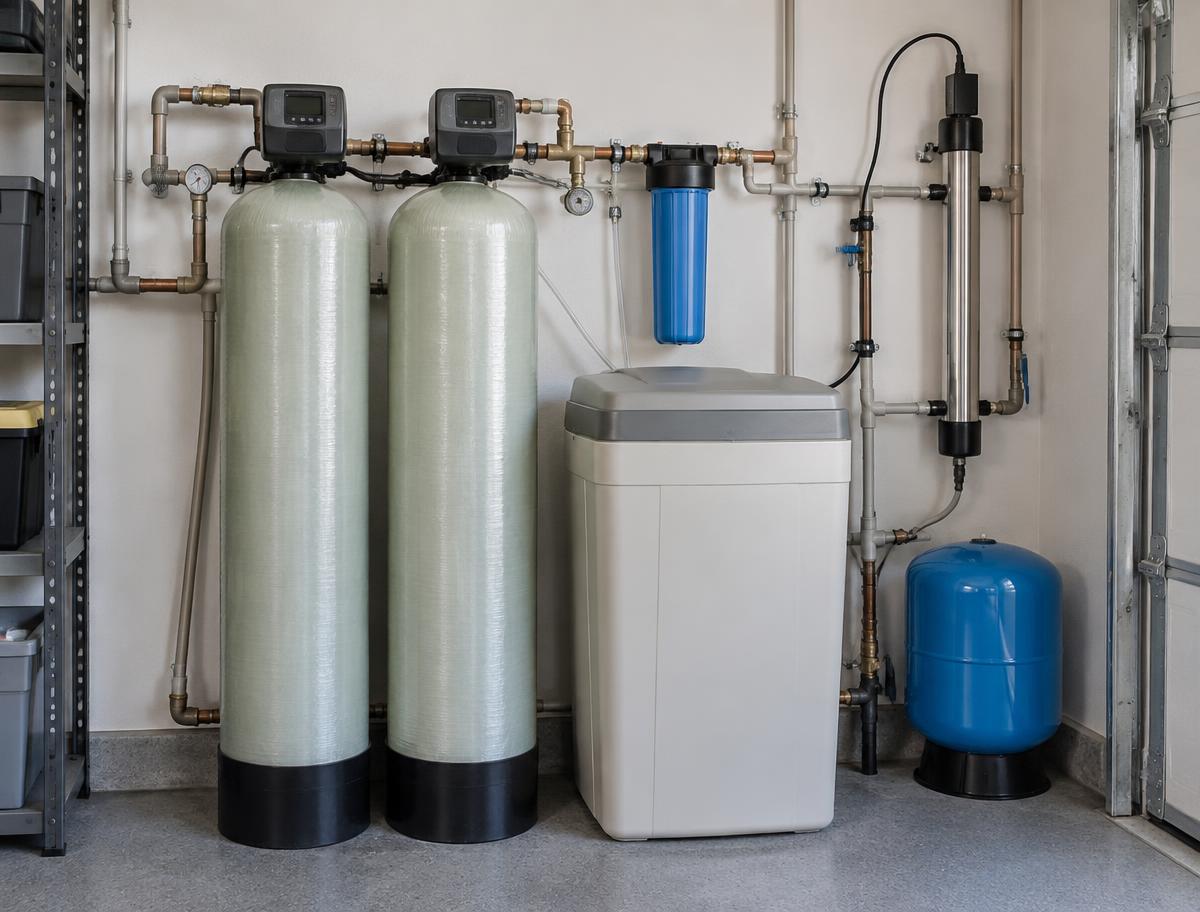
We also test in the right order. Stage sequence matters: sediment ahead of oxidation, oxidation ahead of a softener, softener ahead of a polishing filter. Put a softener first on high-iron water and you will foul the resin within a season.
What Inland Northwest well water actually looks like
Iron and manganese are the most common complaints on this side of the state line — orange staining in toilets, black specks in the aerator, laundry that turns rusty. Both come from rock chemistry, not from a dirty well, and both are straightforwardly treatable with oxidizing filtration.
Hardness varies widely. Wells finished in carbonate-bearing zones and some basalt aquifers can be quite hard; many fractured-quartzite wells in the panhandle are surprisingly soft. Sulfur odor shows up in wells with reducing conditions and is usually chemistry, not contamination.
Arsenic occurs naturally in parts of the Columbia Basin basalt aquifers and in scattered locations elsewhere. It is odorless and tasteless, which is exactly why it belongs on the initial test panel rather than being discovered later.
Bacteria results deserve a plain-language answer. A coliform hit most often means a compromised well cap, a failing surface seal or an unsanitized recent repair — not a doomed well. Diagnosis and shock chlorination come before anyone tries to sell you a permanent purification system.
What we will not tell you
We will not tell you your water is safe without a lab result, and we will not tell you a system removes something it was not specified to remove. If you want a second opinion on our recommendation, the lab report is yours and any competent contractor can read it.
Ground Conditions
North Idaho & Eastern Washington geology.
Water chemistry is inherited from the rock it moved through. The formation your well draws from is the best early predictor of what the lab report will say.
Rathdrum Prairie / Spokane Valley
Glacial outwash — sand, gravel, cobbles, boulders
Generally clean, cold, low-mineral water from coarse outwash. Common concerns are sediment after pump work and vulnerability to surface contamination where seals are old or shallow.
Coeur d'Alene, Sandpoint, Hayden, Bonners Ferry uplands
Belt Supergroup metasedimentary rock — quartzite, argillite, siltite
Often soft and low in total dissolved solids. Localized iron, manganese and occasional sulfide odor appear where fractures move water slowly through reducing conditions.
Priest River, Kaniksu batholith country, higher benches
Granitic bedrock
Typically soft with low mineral content; slightly acidic pH is common and can be corrective on copper plumbing.
Spokane, Cheney, Palouse, Columbia Basin
Columbia River Basalt Group with Latah Formation interbeds
Higher mineral content is common — hardness, iron, manganese and, in parts of the Columbia Basin, naturally occurring arsenic and fluoride. This is the area where a full panel matters most.
Palouse hills and farm ground
Loess — deep wind-blown silt over basalt
Agricultural ground raises the value of nitrate testing, since nitrate is mobile and moves with infiltrating water.
Geology in the Inland Northwest changes over short distances — two neighbors on the same road can have very different wells. Everything below describes conditions that are common in the region, not a prediction for your parcel.
On Your Property
What the job looks like for you.
Sampling done correctly
Samples are collected from the right tap with the right handling and hold time. A sloppy sample produces a misleading report and a system you did not need.
Results explained in plain English
We walk the numbers with you — what exceeds a health standard, what is only an aesthetic nuisance, and what needs nothing done at all.
Install day
Usually one day. Equipment is plumbed with bypass valves so the house keeps water during future service, and backwash discharge is routed to code.
Verification after install
A follow-up test confirms the system did what it was specified to do. If it did not, that is our problem to correct, not yours to live with.
Ongoing maintenance
Salt as used, cartridges typically every 6 to 12 months, media commonly every 5 to 10 years. We document the intervals so nothing is guesswork later.
Typical Investment
What water treatment usually runs.
Ranges below reflect typical projects in our service area. They are planning numbers — not a quote. Your estimate is built from your property, your well data and the actual scope of work.
Water test panel
Lab analysis, common parameters
Sediment & carbon filtration
Whole-house
Water softener
Sized to hardness and demand
Iron / sulfur removal
Oxidizing filtration system
UV purification
Bacteria control
What's Included
Scope of work.
Testing first
Lab panel establishes what's actually in the water.
System design
Treatment stages ordered correctly so each stage protects the next.
Installation
Plumbed with bypass valves so the house keeps water during service.
Drain & discharge
Backwash routed to code.
Post-install test
Retest confirms the system did what it was specified to do.
Service plan
Media life, salt and cartridge intervals documented.
How It Goes
Start to finish.
- 01
Sample
Water sample collected and sent to lab.
- 02
Results review
We walk through the numbers in plain English.
- 03
Install
Usually a single day.
- 04
Confirm
Follow-up test verifies results.
Straight Answers
Questions we
actually get.
Do I need a softener and a filter?
Sometimes. Hardness and iron are different problems; a softener alone will foul quickly on high iron. The test tells us.
Is my well water safe to drink?
We can't say without a lab test, and we won't. A bacteria and nitrate panel is the honest first step.
How often is service needed?
Salt as used, cartridges typically every 6 – 12 months, media every 5 – 10 years depending on the system.
Well Worx does not guarantee depth, water quantity, yield, water quality or geologic conditions. Recorded state well data is historical information published by state agencies and is not a prediction of results on your property.
Also from Well Worx