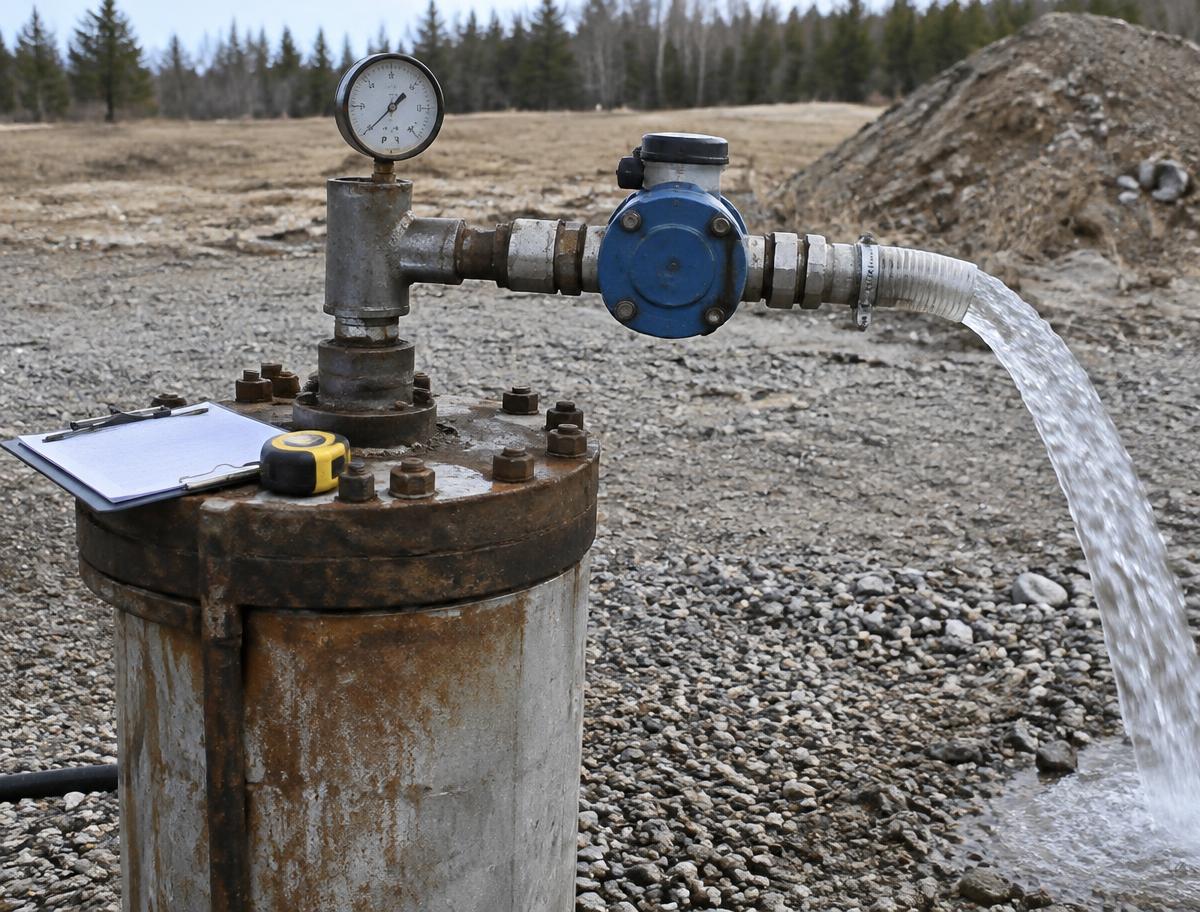
Overview
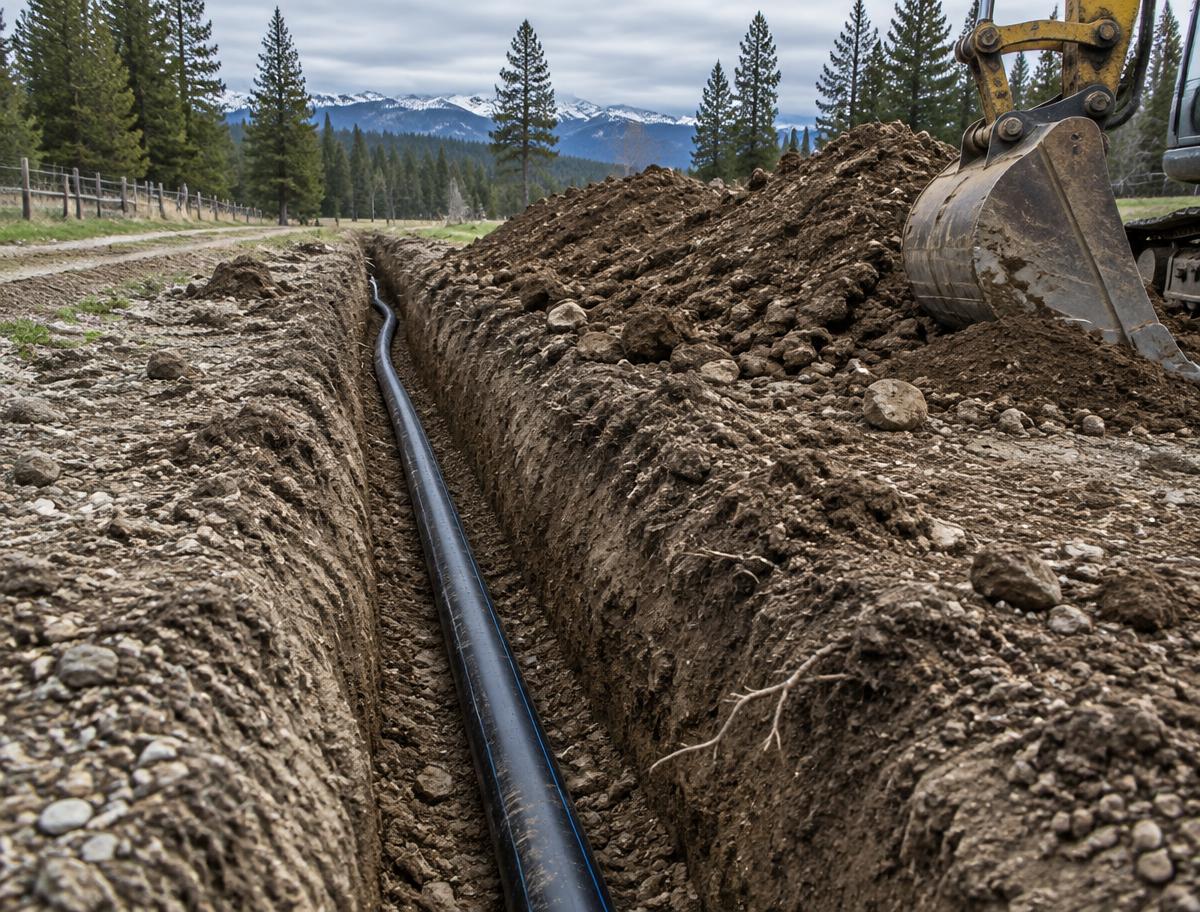
The line between the well and the house is where a lot of good wells go wrong. We trench below frost depth, use properly rated pipe, bed it clean and pressure-test before backfill.
- Burial depth
- Below frost, site-specific
- Pipe
- Rated poly / PVC
- Tracer wire
- Installed standard
- Pressure test
- Before backfill
- Equipment
- Excavator, hammer, trencher
In Depth
What to expect, explained properly.
The line is where good wells get ruined
A perfect well and a properly sized pump can still deliver poor water service if the line between them and the house is undersized, shallow, or bedded in sharp rock. Buried line failures are also the most expensive kind to find later, because everything above them has already been landscaped, graveled or paved.
Sizing is a real calculation, not a habit. Run length, elevation gain, fitting count and design flow determine friction loss. Undersizing by one pipe diameter on a long run can cost more pressure at the house than the pump ever makes up.
Frost, rock and the Inland Northwest ground
Lines here are buried below local frost depth, and in North Idaho that regularly means several feet. Site conditions push it deeper: north-facing slopes, plowed driveways that strip insulating snow, and exposed ridge ground all freeze deeper than a sheltered yard.
Then there is rock. On Belt-rock benches and basalt shelves you can be into competent rock a foot below the topsoil. That means hammer or rock-saw trenching, which is slower and priced separately by the foot. We flag that possibility up front when the site suggests it rather than surprising you with a change order mid-trench.
How we build a line that outlives the pump
Utility locates are called before any ground opens. The trench is cut to depth, the bottom cleared of rock, and the pipe bedded in sand or screened material so no point load can work its way through the wall over twenty winters.
Rated poly or PVC is used, joints are made properly, tracer wire is installed so the line can be located in the future, and the whole run is pressure-tested and held before a shovel of backfill goes on top. Backfilling an untested line is the single most common shortcut in this trade.
Ground Conditions
North Idaho & Eastern Washington geology.
Trenching cost and method depend almost entirely on what is under the topsoil on your specific route.
Rathdrum Prairie / Spokane Valley
Glacial outwash — sand, gravel, cobbles, boulders
Easy digging in sand and gravel, but cobbles and boulders are common and bedding material is essential to protect the pipe from point loads.
Coeur d'Alene, Sandpoint, Hayden, Bonners Ferry uplands
Belt Supergroup metasedimentary rock — quartzite, argillite, siltite
Hard rock is often shallow on benches and hillsides. Expect hammer work, higher per-foot cost, and careful bedding in a rock trench.
Priest River, Kaniksu batholith country, higher benches
Granitic bedrock
Weathered decomposed granite trenches reasonably well; intact granite does not, and the two can be a few feet apart on the same run.
Spokane, Cheney, Palouse, Columbia Basin
Columbia River Basalt Group with Latah Formation interbeds
Basalt shelves can appear abruptly at shallow depth. Route selection across a property can meaningfully change the cost of the job.
Palouse hills and farm ground
Loess — deep wind-blown silt over basalt
Deep silt trenches quickly and cheaply, but it holds water and sloughs, so trench safety and compaction on backfill matter.
Geology in the Inland Northwest changes over short distances — two neighbors on the same road can have very different wells. Everything below describes conditions that are common in the region, not a prediction for your parcel.
On Your Property
What the job looks like for you.
Locates before digging
Public utility locates are called and any private lines — power to a shop, septic, propane, irrigation — are identified with you before excavation.
Real ground disturbance
An excavator leaves a trench scar and tracked ground. We restore and compact, but a lawn or pasture over a fresh trench takes a season to blend back in.
Duration
A typical residential run is one to two days. Rock, long runs, driveway or road crossings and wet ground extend that.
Pressure test before backfill
The line is charged and held while it is still exposed. You are welcome to be there for it.
Documentation
Route, depth, pipe type and tracer wire are recorded in your project file so nobody has to guess where the line runs in ten years.
Typical Investment
What water lines usually runs.
Ranges below reflect typical projects in our service area. They are planning numbers — not a quote. Your estimate is built from your property, your well data and the actual scope of work.
Trenching & line install
Per foot, normal soils
Rock trenching
Per foot, where hammer work is required
Pitless adapter
Below-frost casing connection
Leak location & repair
Excavation and repair
What's Included
Scope of work.
Locate
Utility locates called and existing lines identified before digging.
Trenching
Excavated below regional frost depth.
Pipe
Rated poly or PVC sized for flow and run length.
Bedding
Sand or screened bedding to protect the pipe from rock.
Pressure test
Line tested and held before it's covered.
Restoration
Backfill, compaction and surface cleanup.
How It Goes
Start to finish.
- 01
Locates
Required before any excavation.
- 02
Trench
Typically 1 – 2 days for a residential run.
- 03
Test
Pressure held and verified.
- 04
Backfill
Compacted and restored.
Straight Answers
Questions we
actually get.
How deep does the line go?
Below local frost depth. In North Idaho that's commonly several feet, and site conditions can push it deeper.
What if we hit rock?
Rock trenching is priced separately by the foot. We flag the possibility up front when the site suggests it.
Can you find an existing leak?
Yes — pressure isolation and locating narrow it down before we open ground.
Well Worx does not guarantee depth, water quantity, yield, water quality or geologic conditions. Recorded state well data is historical information published by state agencies and is not a prediction of results on your property.