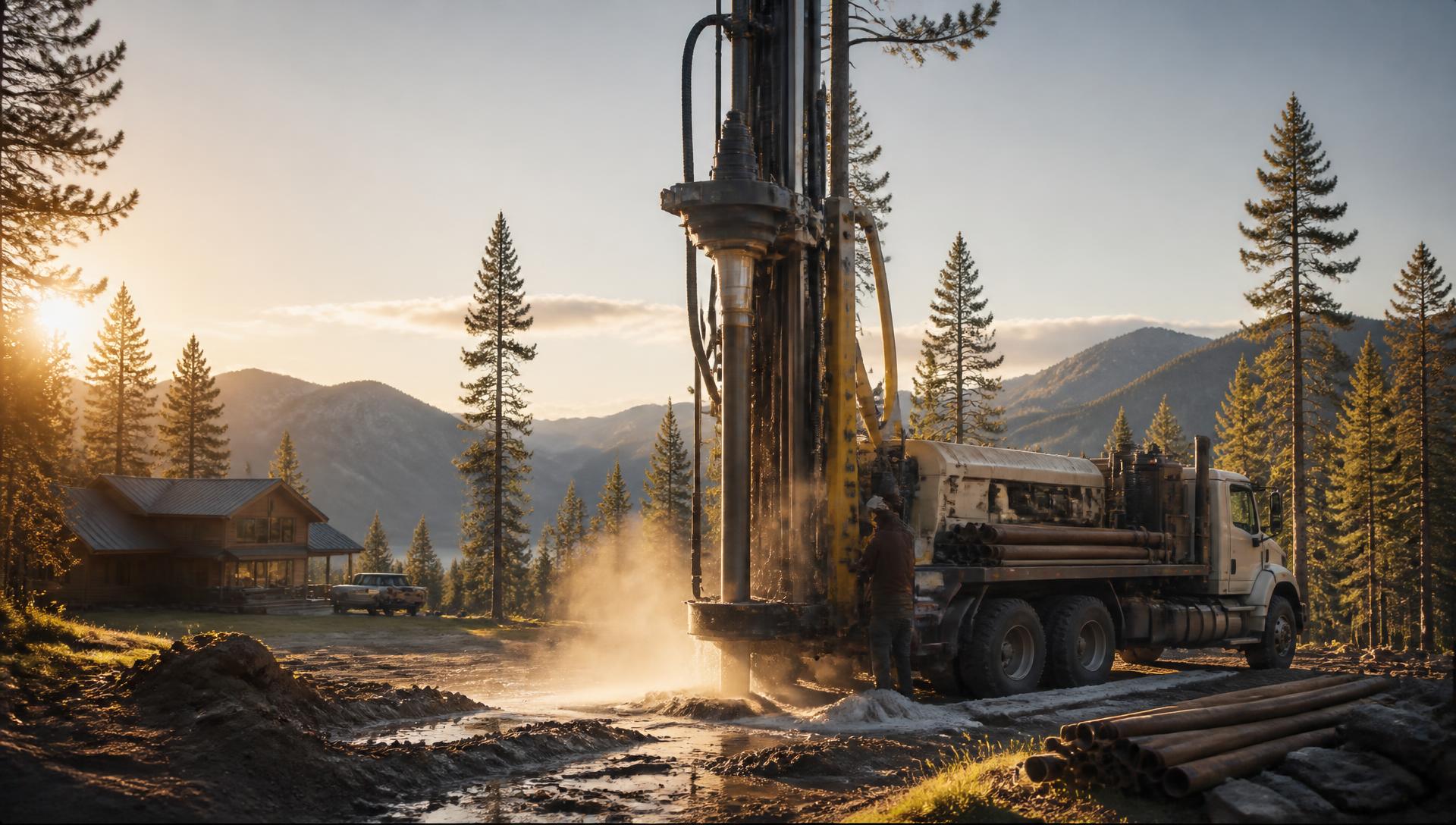
Water Wells
From the ground up.
Finding water, drilling it right, and documenting every foot of it — residential, ranch, commercial and municipal.
- 180–420 ft
- Typical depth
- 1–3 days
- On site
- 2 states
- Idaho & Washington
- 100%
- Logged & filed
Start here
Type an address.
Watch the ground answer.
Every well drilled in Idaho and Washington gets reported to the state. Drop in the property and we'll pull the wells around it — how deep they went, how much water they made, what the drillers hit on the way down.
No account, no obligation. Takes about a minute.
- Recorded state well logs near the parcel
- Depths, static levels & reported yields
- A planning range — never a fixed price
What you get
A well is a permanent piece of your property. We treat it that way.
We research before we drill
Recorded state well logs around your parcel tell us likely depth, static level and yield. You see those records before you spend a dollar.
Built to a fixed standard
6-inch borehole into competent bedrock, 6-inch steel casing, 38-foot surface seal, developed and yield-tested before anyone talks about a pump.
Honest about the ground
Drilling is paid by the foot because rock does not negotiate. We tell you the range nearby records support and what happens if we pass it.
Every foot documented
Driller's log, permit, yield test and photos filed with the state and kept in your project record permanently.
Wells we drill
Pick the one that sounds like your property.
A house on bare land.
The bulk of what we drill. One home, one well, sized so the pump never has to fight the well. We site it for setbacks, septic distance, driveway access and the day someone has to service it.
Plan this well- Typical depth
- 180 – 420 ft
- Days on site
- 1 – 3
- Yield needed
- 5 – 10 gpm
Down the hole
Drag the bit down and see what we’re drilling through.
210–330 ft
Fractured bedrock
Basalt or granite with cracks running through it — the cracks are the point.
Most North Idaho wells make their water here. The driller watches for the moment the air line starts blowing water instead of dust.
Illustrative geology for North Idaho and Eastern Washington. Your property’s actual layers come from the recorded wells around it.
Planning ranges
- Drilling
- Per foot of borehole
- Steel casing & surface seal
- Per foot of cased depth
- Site work & permitting
- Mobilization, permits, cleanup
- Typical complete well
- 250 – 320 ft, before pump system
Typical ranges, not a quote. Your number comes from the depth the geology actually requires.
How it runs
Water rights & permitting
Will you need a water right?
A drilling permit covers the hole. A water right covers what you do with what comes out of it. Most homes drill under a domestic exemption — and that exemption is smaller than most people expect. Tick anything that sounds like your plans.
- 13,000
- gallons per day
- ½ acre
- of lawn & garden
What this suggests
Nothing ticked yet. A standard single home on its own well usually falls inside the domestic exemption — but the details decide it.
General information, not legal advice. Exemption limits and basin rules change — confirm your situation with Idaho Department of Water Resources.
Understand water rightsPump Systems
Your well is only the beginning.
A properly designed pump, pressure and treatment system is what turns a drilled well into dependable water at the tap.
Complete Water Systems
Need the whole thing handled?
Plan, drill, test, pump, connect and hand over the records — one company, one schedule, one warranty.